
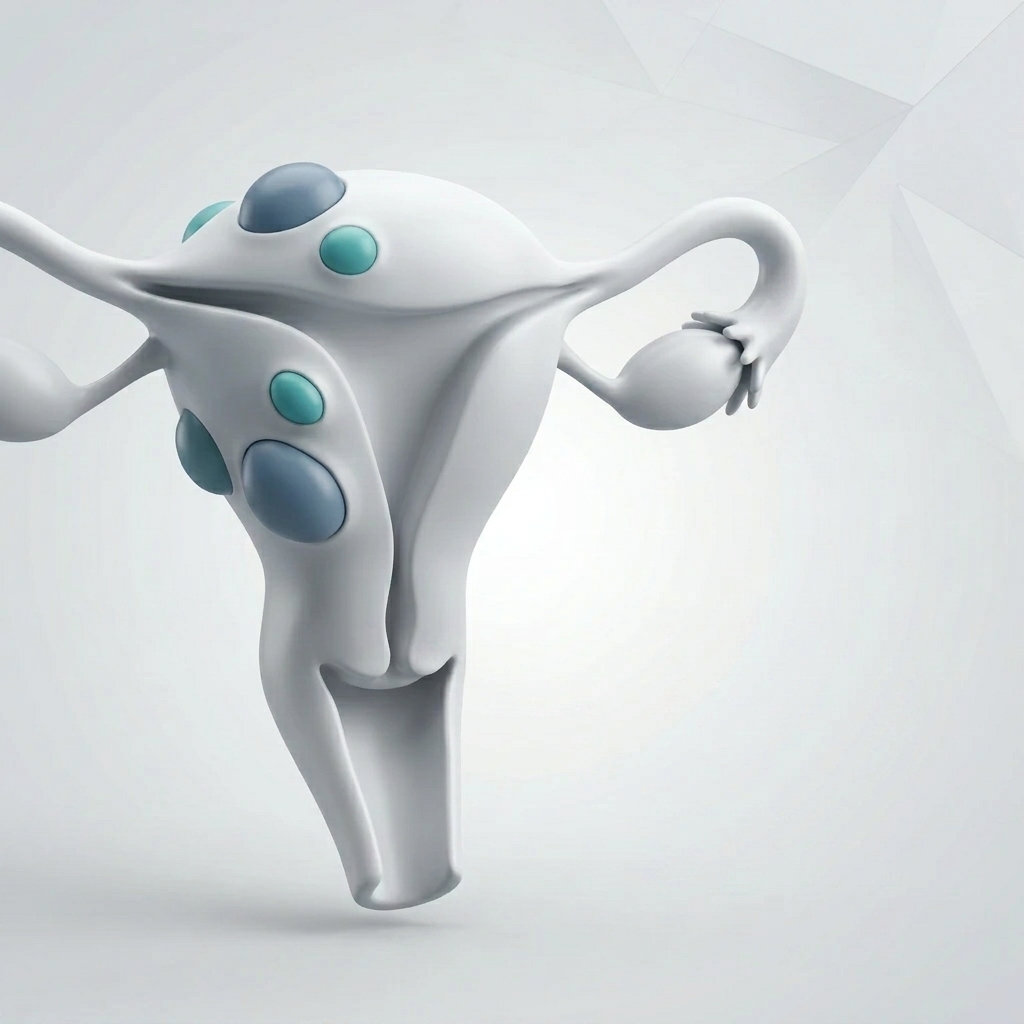
What are the Symptoms of Uterine Fibroids?
Uterine fibroids can cause the following symptoms in some patients:
- Irregular or heavy menstrual bleeding
- Pelvic pressure-fullness sensation and pain
- Frequent urination
- Constipation
- Early satiety
- Palpable abdominal mass
- Infertility and recurrent pregnancy losses
How Many Types of Uterine Fibroids Are There?
Uterine fibroids are classified according to their location:
- Submucosal: Completely located within the endometrial layer (uterine cavity)
- Intramural: Located within the myometrial layer of the uterus with varying degrees of involvement
- Subserosal: Located within the serosal layer of the uterus with varying degrees of involvement
In addition, though rare, prolapsed fibroids into the vagina or parasitic fibroids that detach from the uterus and implant in any area within the abdomen, deriving their blood supply there, can also be observed.
How is the Diagnosis Made?
The diagnosis of uterine fibroids is mostly made by ultrasound. In some patients, MRI imaging can also assist in the diagnosis.
Treatment Options
Uterine fibroid treatment varies according to the type of complaint:
Medical Treatment
Patients with pain and irregular bleeding may benefit from analgesics or hormonal medications.
Hysteroscopy
Especially submucosal fibroids located within the inner layer of the uterus can be removed hysteroscopically — using a camera to visualize the inside of the uterus.
Laparoscopy
Fibroids located in the uterine muscle layer, outer layer, or distant organs can be treated laparoscopically — by making small incisions in the abdominal skin to visualize the abdominal cavity.
Treatment Without Incision: Fibroid Ablation
Patients who do not benefit from medical treatment and do not accept laparoscopic or open surgical methods may benefit from fibroid ablation.
Fibroid ablation can be considered in patients who wish to preserve the uterus, provided there is no suspicion of cancer. Especially in fibroids smaller than 10 cm, a reduction in fibroid volume by 80% can be achieved.
Can Fibroids Turn into Cancer?
Uterine fibroids are mostly benign tumors. However, rapidly growing, painful fibroids, especially in older age, should be investigated for cancer. The rate of cancer detection after fibroid surgery varies with age but is 1 in 700 or 1 in 1000.
All Specialties